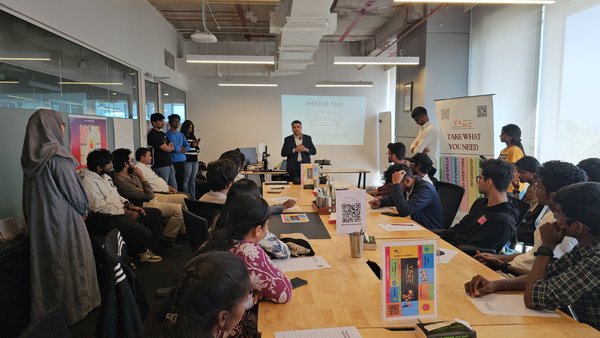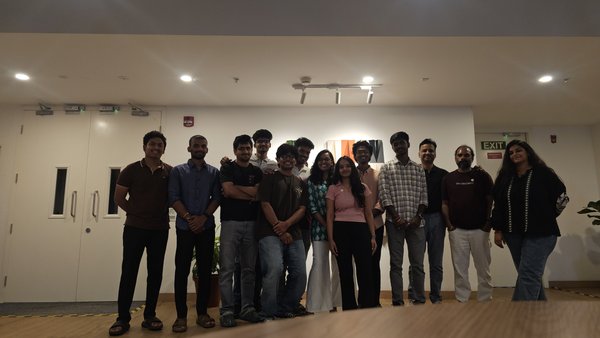
Every cohort begins the same way: a room full of people who are unsure whether they belong. By the end of the first session, that uncertainty has usually turned into a question worth asking out loud.
The syllabus stops early
School prepares you to answer questions. Life mostly asks you to find them. Somewhere between those two skills sits a gap nobody hands you a textbook for — how to introduce yourself, how to ask for help, how to disagree without shutting down.
What a network actually does
A network is not a list of contacts. It is a set of people who have seen you try something and fail at it, and who still pick up the phone.
- It shortens the distance between curiosity and a first step.
- It replaces guessing with someone who has already been there.
- It gives you feedback before the stakes get expensive.
The fastest way to learn something new is to stand next to someone doing it.
Building it on purpose
Most young people assume networks happen by accident. They do not. They are built the same way any skill is built — by showing up regularly, contributing before asking, and staying in touch after the event ends.