Your twenties can make you feel late before you have even started. Maybe the problem isn't that you're behind. Maybe you're looking at the wrong race.
There is a strange feeling that comes with being in your twenties.
You open LinkedIn and someone your age has started a company. Someone got a job at a company you wanted to work for. Someone bought their first car. Someone is travelling, building a personal brand, launching something, or talking about their five-year plan.
And then you look at your own life and think, What am I doing?
I have had this thought more times than I would like to admit. The uncomfortable part is that it doesn't take much for comparison to turn into a conclusion: maybe they have something I don't. Maybe I am wasting time. Maybe I am already falling behind.
But we rarely know enough about another person's life to make that comparison. We see the result, not the years of uncertainty that came before it. We see the announcement, not the attempts that failed. We see the person who seems to know where they are going, not the months they spent wondering whether they were going in the right direction.
Your Twenties Are for Collecting Evidence
I think we also expect too much certainty from people in their twenties.
We ask, What do you want to do with your life? as if there is a correct answer and you are supposed to find it quickly.
But how could you know? Most of us have only experienced a tiny fraction of the things we could possibly do.
You might think you want to build a company because you like the idea of entrepreneurship, until you actually try building something. You might think you hate public speaking until someone gives you a reason to speak. You might think a certain career is perfect for you because it looks good from the outside, only to discover that you don't enjoy the work.
This is why I think your twenties are less about finding the answer and more about collecting evidence.
Try things. Build things. Work with different people. Start something that might fail. Have conversations with people outside your usual circle.
Every experience tells you a little more about what you want, what you don't want, and what you might be capable of.
Stop Consuming. Start Creating.
The bigger danger is not being confused. It is becoming comfortable with being confused.
There is a difference between not knowing what you want and doing nothing because you don't know what you want.
We live in a time where it is incredibly easy to consume instead of create. You can spend an entire day watching someone else's journey, reading about someone else's career, saving advice, listening to podcasts and telling yourself that you are preparing.
But eventually you have to step into the world and get some real feedback.
Write something. Build something. Organise something. Go to an event. Talk to someone you don't know.
The thing you create may be terrible. The conversation may go nowhere. The event may have problems.
That's fine. At least now you know something you didn't know yesterday.
Creation gives you information that consumption can't.
You Need People, Not Just Plans
And this is where people become important.
Sometimes the thing you are missing isn't another course, another productivity system or another motivational video.
It is a person.
Someone who has tried something you haven't. Someone who asks you a question you hadn't considered. Someone who tells you about an opportunity you didn't know existed. Someone who is just as uncertain as you are but is still trying.
A community can be valuable for exactly this reason.
You don't necessarily need people who have everything figured out. You need people who are curious enough to explore with you.
Maybe You Just Need Your Next Experience
Maybe you don't need a five-year plan. Maybe you need your next experience.
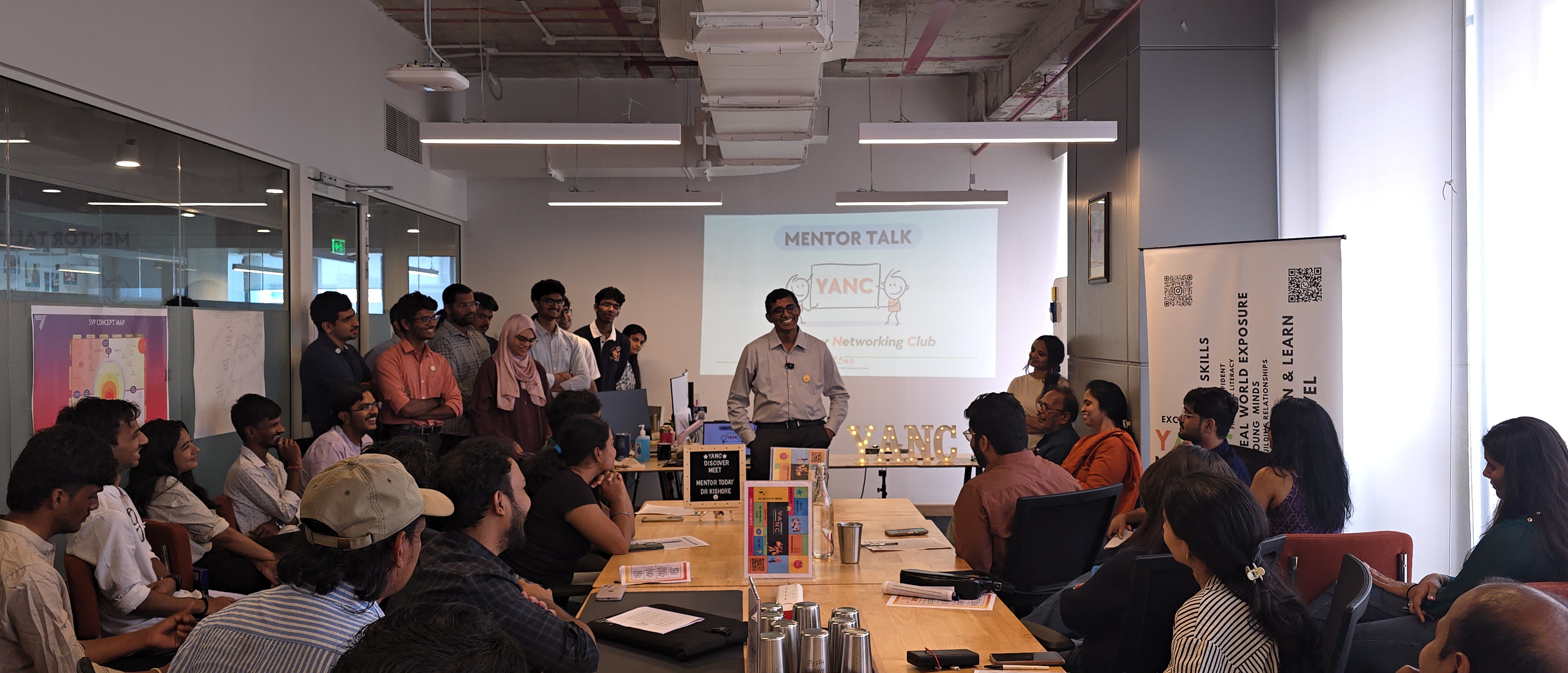
YANC can be that place.
A community where you can meet people who want to build something, learn something, or simply find their direction, even when they don't have all the answers yet.
You might come to a networking event expecting nothing more than a conversation and leave with an idea, a collaborator, a mentor, or simply the feeling that you aren't the only person figuring things out.
You don't have to arrive with a clear plan. You just have to be willing to participate.
Your twenties are not a race where everyone reaches the same milestones at the same age.
They are a period in which you get to discover what kind of work excites you, what kind of people inspire you, what problems you care about, and what you are capable of creating.
Some people will figure these things out earlier. Others will take longer. That is okay.
The important thing is that you keep moving.
You don't have to figure everything out in your twenties. You just have to give yourself enough chances to figure out what comes next.